Introduction
Navigating the bustling streets of China’s major metropolises like Beijing, Shanghai, and Shenzhen requires a smart approach to transportation. For office commuters and visitors alike, the “first-mile, last-mile” challenge—getting from your home or hotel to the nearest subway station or directly to your office—is a daily reality. While public transport is world-class, the freedom of a personal vehicle is unmatched. In this guide, we explore how bike rentals and sharing services in China provide an affordable, flexible, and efficient solution for modern urban travel.
Why Renting a Bike in China Is a Smart Choice
In densely populated cities, traffic congestion is a constant hurdle for those using cars or buses. Renting a bike or using China’s ubiquitous bike-sharing systems offers several advantages:
- Time Efficiency: Avoid gridlock during peak morning and evening hours by utilizing dedicated bike lanes.
- Cost-Effectiveness: Shared bikes cost as little as 1.5 RMB for a 15–30 minute ride, significantly cheaper than taxis or private car services.
- Eco-Friendly: Cycling is a zero-emission mode of transport, contributing to greener and cleaner urban spaces.
- Flexibility: Whether you are a local office worker or a short-term visitor, you can unlock a bike anywhere and leave it at a designated parking zone near your destination.
Who Should Rent a Bike in China?
- Office Commuters: Perfect for professionals looking to bypass traffic and reach the subway or office quickly.
- First-Time Travelers: An excellent way to explore city landmarks at your own pace without relying on crowded buses.
- Expatriates: Ideal for daily travel needs while you settle into the city’s rhythm.
- Budget Travelers: A highly affordable way to navigate cities without spending heavily on private hire vehicles.
Understanding China’s Bike-Sharing Culture
Unlike traditional long-term rentals, China’s primary model is “station-less” bike sharing. Platforms like Meituan Bike (yellow), Hello Bike (blue), and Qingju by Didi (green) dominate the market.
- How it Works: You simply download an app (often integrated into WeChat or Alipay), scan the QR code on the bike, and unlock it instantly.
- Ease of Use: With recent updates to digital payment systems, foreign travelers and residents can link international credit cards to these apps, removing the need for a local bank account.
Types of Two-Wheelers for Commuters
Depending on your distance and needs, you can choose from:
- Standard Bicycles: The standard “dockless” bikes found on every corner. Best for short trips under 3km.
- Electric Bikes (E-Bikes): The most popular choice for longer commutes. They offer pedal-assist or full electric power, making it easier to travel 5–10km without breaking a sweat.
- Electric Scooters: Often available for rent through local apps or specialized rental shops, these provide more comfort and speed for cross-city travel.
How to Choose the Right Vehicle for Your Needs
- Distance: For short hops to the metro, a standard bicycle is sufficient. For a 30-minute office commute, choose an e-bike.
- Terrain: If your city has hilly areas or bridges, an electric-powered model will significantly reduce physical strain.
- Budget: Standard bikes are the most economical, while e-bike rentals are slightly higher but offer much greater speed and convenience.
Essential Requirements for Renting
While shared bikes are easy to access, always keep these requirements in mind:
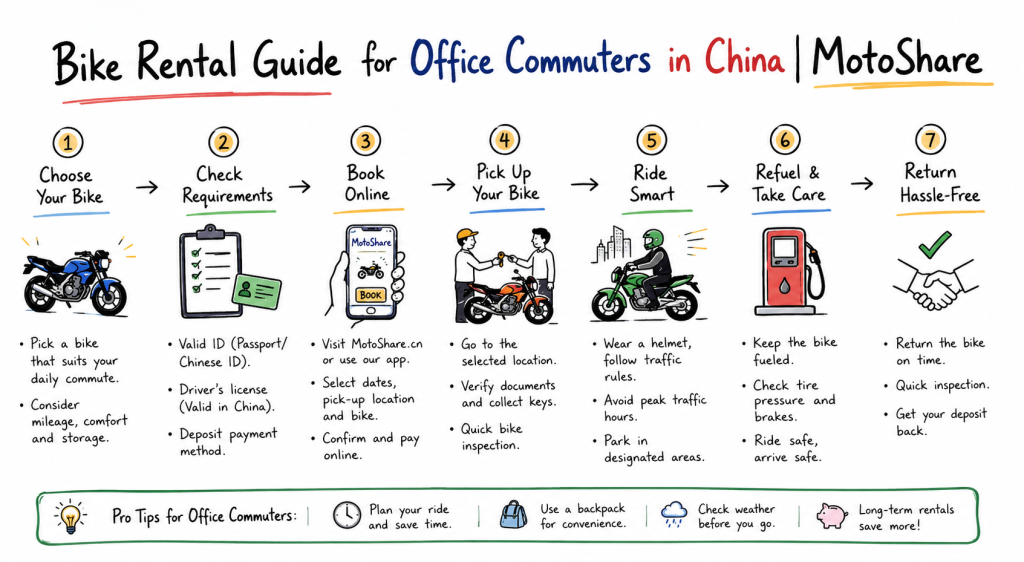
- Digital Access: An active mobile data plan (eSIM is highly recommended) is mandatory to scan QR codes and navigate.
- Payment Apps: Ensure you have Alipay or WeChat set up with a verified identity (passport) and a linked payment method.
- Local Traffic Rules: Always ride in designated bike lanes. Riding against traffic is illegal and strictly enforced.
- Parking: Always end your trip within the painted “e-fence” zones on the sidewalk to avoid extra fees.
Comparison: Bike Rental vs. Public Transport vs. Taxi
| Feature | Bike Rental/Sharing | Public Transport | Taxi/Ride-Hailing |
| Cost | Very Low | Low | High |
| Convenience | High (Door-to-door) | Moderate (Fixed stops) | High |
| Flexibility | Maximum | Limited to schedules | High |
| Comfort | Moderate (Open air) | High (AC/Heating) | High |
| Speed (Peak Hour) | Fast (Bypass traffic) | Moderate | Very Slow |
Safety Tips for Riding in China
- Helmet Usage: While not always mandatory for non-motorized bikes, wearing a helmet is highly encouraged for your safety.
- Stay Alert: Chinese cities are busy; watch for pedestrians who may step into bike lanes.
- Follow Signals: Always respect traffic lights, even on a bicycle.
- Weather: Check the weather app before your commute. Avoid riding during heavy rainfall, which can make streets slippery.
FAQs
1. Can foreigners use shared bikes in China?
Yes, foreigners can easily use apps like Meituan or Hello Bike by verifying their account with a passport in Alipay or WeChat.
2. Do I need a Chinese bank account?
No. You can now bind international Visa or Mastercard cards to your payment apps for micro-transactions.
3. How much does it cost?
Typically, rides cost around 1.5 RMB for the first 15–30 minutes.
4. Where can I park my bike?
You must park inside the designated white-painted rectangles (e-fences) on the sidewalk.
5. Is a driving license required for shared bikes?
No, a standard bicycle or low-speed e-bike does not require a license. However, high-speed electric scooters may have different regulations.
6. What if the bike is broken?
You can report a broken bike directly in the app, and the system will end your rental so you aren’t charged.
7. Can I take the bike to another city?
No. Bikes must remain within the service zone of the city where they were unlocked.
8. Is mobile data necessary?
Yes, an active internet connection is required to unlock and lock the bikes via the app.
9. Are helmets provided?
Some cities offer helmet rental add-ons, but it is best to carry your own if you are commuting daily.
10. What are the operating hours?
Shared bike services are available 24/7.
Conclusion
Mastering the art of bike rental and sharing transforms your daily commute in China from a stressful chore into an efficient and enjoyable experience. By embracing this sustainable and flexible mode of transport, you gain the freedom to navigate your city on your own terms. Whether you are a long-term resident or a visiting professional, the infrastructure is ready for you.
For those traveling to or living in India, remember that MotoShare India offers similar ease and flexibility for your vehicle rental needs. Explore our wide range of bikes and cars at to find the perfect ride for your next journey. If you are specifically looking for insights or operations related to the Chinese market, please visit motoshare.cn to learn more about our commitment to seamless mobility.
